
Modern food and beverage manufacturers need processing technologies that preserve product quality while reducing chemical use, energy consumption, and waste generation. In fruit juice and wine production, unwanted salts and excessive organic acids can affect taste, stability, storage life, and consumer acceptance.
Electrodialysis for fruit juice desalination and tartaric acid removal from wine provides a selective membrane-based solution. It can reduce undesirable ionic components while retaining much of the product’s valuable flavour, colour, aroma, and nutritional profile.
Explore the Fruit Juice Desalination and Wine De-acidification Application.
What Is Electrodialysis?
Electrodialysis is a membrane separation technology that uses direct electrical current and ion-exchange membranes to remove charged ions from a liquid stream.
The process uses alternating cation-exchange and anion-exchange membranes. When an electric field is applied:
-
Positively charged ions move toward the cathode.
-
Negatively charged ions move toward the anode.
-
Selective membranes allow specific ions to pass.
-
Product and concentrate streams are formed inside the stack.
Unlike thermal evaporation, electrodialysis does not require a phase change. This can make it a practical option for applications where selective desalination or deacidification is required.
Fruit Juice Desalination Using Electrodialysis
Fruit juices may contain mineral salts and ionic compounds that influence taste, acidity, stability, and formulation flexibility. Electrodialysis can be used to reduce selected charged components while keeping the main juice characteristics largely intact.
The process may help manufacturers achieve:
-
Controlled reduction of mineral salts
-
Improved formulation flexibility
-
Better consistency between batches
-
Reduced dependence on chemical treatment
-
Lower thermal exposure
-
Improved process control
-
Better suitability for specialty beverage applications
The exact treatment level depends on the juice type, ionic composition, flow rate, temperature, membrane configuration, and desired final specifications.
Why Desalination Matters in Fruit Juice Processing
Excess mineral content can affect the sensory and technical properties of juice products. It may influence:
-
Taste balance
-
Acidity perception
-
Product stability
-
Concentration behaviour
-
Blending performance
-
Shelf-life characteristics
-
Compatibility with downstream processing
Electrodialysis allows manufacturers to target ionic components more selectively than broad, non-selective treatment methods.
Because the process operates without boiling the juice, it may also help reduce unnecessary thermal stress. However, product quality must always be validated through application-specific testing.
Removing Tartaric Acid from Wine
Tartaric acid is a naturally occurring organic acid found in grapes and wine. Its potassium and sodium salts can become less soluble when wine is cooled or stored under certain conditions.
This can lead to the formation of crystalline deposits, commonly known as tartrate crystals or wine diamonds.
Although these crystals are generally harmless, their presence can create quality and presentation concerns, particularly in bottled wine and sparkling wine products.
Electrodialysis can reduce tartaric acid and related salts to a level that remains within the required solubility range at the intended storage temperature.
Why Tartrate Stability Is Important in Sparkling Wine
In sparkling wine and champagne-style products, tartrate crystallisation can create an additional issue. Crystals at the bottom of the bottle may encourage the release of dissolved carbon dioxide when the bottle is opened.
This can contribute to uncontrolled foam formation and affect the consumer experience.
By reducing tartaric acid and its salts through controlled electrodialysis, producers can improve cold-storage stability and reduce the risk of visible crystallisation.
How Electrodialysis Helps Control Tartaric Acid
The electrodialysis stack selectively removes charged species from the wine stream. Depending on the process design, the treatment can reduce tartarate-related ionic components while limiting unnecessary changes to the main product.
A typical process-development workflow includes:
-
Testing the wine’s ionic composition and tartaric acid profile.
-
Defining the required stability target.
-
Selecting a suitable membrane configuration.
-
Running laboratory or pilot-scale trials.
-
Establishing the required treatment intensity.
-
Validating taste, colour, aroma, acidity, and storage stability.
-
Designing the commercial-scale system.
The process should be tailored to the wine style, target market, storage conditions, and regulatory requirements.
Key Benefits of Electrodialysis for Juice and Wine
Selective Ion Removal
Electrodialysis focuses on charged components rather than removing all dissolved material indiscriminately.
Lower Thermal Exposure
Because the process does not depend on boiling or evaporation, it may help reduce heat-related impact on sensitive beverage characteristics.
Improved Product Stability
Reducing unwanted salts and tartaric acid can help improve stability during cooling and storage.
Better Process Repeatability
Electrical and hydraulic parameters can be monitored and controlled for more consistent treatment from batch to batch.
Reduced Chemical Dependency
The process can reduce the need for chemical deacidification or precipitation methods in suitable applications.
Flexible Treatment Level
The system can be configured to achieve partial or deeper desalination depending on the product requirement.
Suitable for Modern Beverage Processing
Electrodialysis supports current industry priorities such as gentle processing, resource efficiency, lower waste, and improved product consistency.
Frequently Asked Questions
What is fruit juice desalination?
Fruit juice desalination is the controlled removal of selected mineral salts and ionic components from fruit juice to improve taste, stability, formulation, or processing performance.
How does electrodialysis desalinate fruit juice?
Electrodialysis uses an electric field and ion-exchange membranes to move charged ions out of the juice into a separate concentrate stream.
What is tartaric acid removal from wine?
It is the controlled reduction of tartaric acid and related tartrate salts to reduce the risk of crystal formation during wine cooling and storage.
Why do tartrate crystals form in wine?
Potassium and sodium salts of tartaric acid can become less soluble at lower temperatures. When their concentration exceeds the solubility limit, crystals may form.
Can electrodialysis preserve wine flavour?
Electrodialysis is a selective membrane process and can reduce ionic components without relying on high-temperature evaporation. Product quality must still be verified through sensory and analytical trials.
Is electrodialysis suitable for sparkling wine?
It can be evaluated for sparkling wine applications where tartrate stability and controlled acid reduction are required.
Does electrodialysis remove all acids from wine?
No. The process is designed for controlled removal of selected charged components. The treatment level depends on the membrane system and operating conditions.
Is pilot testing required?
Yes. Pilot testing is recommended to evaluate membrane compatibility, product quality, treatment level, energy consumption, and long-term stability.
Electrodialysis Compared with Conventional Wine Stabilisation
Electrodialysis is not automatically the best solution for every beverage. The correct technology depends on the product and the target result.
| Factor | Electrodialysis | Conventional Treatment |
|---|---|---|
| Separation method | Selective membrane separation | Chemical, thermal, or crystallisation-based |
| Thermal exposure | Low | May be higher, depending on method |
| Chemical addition | Potentially lower | May be higher, depending on method |
| Process control | Electrical and hydraulic control | Depends on treatment method |
| Treatment flexibility | Adjustable ionic removal | Often less selective |
| Waste profile | Concentrate stream requiring management | May generate precipitate or chemical waste |
| Scale-up | Modular stack design | Depends on equipment and process |
The strongest approach is to compare technologies using real product data rather than relying on generic claims.
Technology Trends in Beverage Electrodialysis
The beverage industry is moving toward technologies that combine quality preservation with measurable resource efficiency. Current process-development priorities include:
Gentle Processing
Manufacturers are looking for alternatives that minimise unnecessary heating and preserve delicate product characteristics.
Membrane Selectivity
Improved membrane selection allows manufacturers to target specific ions and reduce unwanted changes to the product.
Automated Operation
Modern systems can include automatic control of voltage, current, flow, pressure, temperature, conductivity, and treatment time.
Real-Time Process Monitoring
Online measurements can help operators monitor desalination progress and maintain repeatable product specifications.
Modular Plant Design
Pilot, demonstration, and commercial systems can be developed using scalable electrodialysis stack configurations.
Reduced Waste
Electrodialysis can reduce the need for chemical precipitation and support better management of separated ionic streams.
Data-Driven Product Development
Laboratory and pilot data can be used to develop treatment recipes for different juice varieties, wine styles, and product grades.
Related Electrodialysis Applications
A company exploring fruit juice desalination or wine de-acidification may also be interested in related membrane-based technologies.
Soy Sauce Desalination
Electrodialysis for Soy Sauce Desalination can reduce salt content while helping preserve important flavour, colour, and aroma characteristics.
The same general membrane platform may also be evaluated for sugar molasses, amino-acid streams, and selected food products.
Cheese Whey Desalination
Electrodialysis for Cheese Whey Desalination is used to reduce mineral salts in whey before further dairy processing.
Organic Acid Production
Organic Acid Production from Organic Acid Salts uses electrodialysis or bipolar electrodialysis for selected acid-conversion and desalting applications.
Pharmaceutical and Chemical Intermediate Desalination
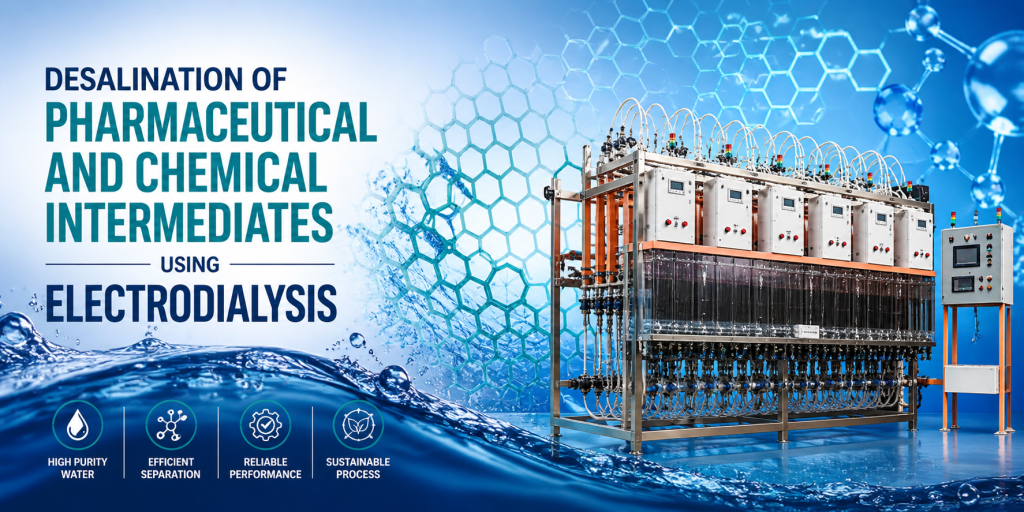
Desalination of Pharmaceutical and Chemical Intermediates supports the removal of unwanted ionic content from valuable process streams.
Colloidal Silica Manufacture
Colloidal Silica Manufacture Using Electrodialysis uses an electrodialysis-based Electrosol process for sodium silicate dealkalisation and silica sol production.
Electrodialysis Machines and Applications
Review the complete Electrodialysis Machines and Applications portfolio for food, beverage, pharmaceutical, chemical, desalination, organic-acid, and resource-recovery applications.
Global Applications in Food, Beverage, and Wine Processing
Electrodialysis is relevant to beverage manufacturers, wineries, juice processors, dairy companies, and food-ingredient producers across global markets.
For international projects, process design should consider:
-
Local food-processing regulations
-
Product labelling requirements
-
Membrane and material compatibility
-
Hygienic design
-
Cleaning and sanitation procedures
-
Electrical standards
-
Product storage temperature
-
Waste-stream management
-
Operator training
-
Validation and quality-control systems
A globally suitable plant must be designed around the actual product, not simply copied from another installation.
How to Select the Right Electrodialysis System
Before investing in a commercial plant, manufacturers should evaluate:
-
Product composition: Analyse mineral salts, organic acids, sugars, proteins, colour compounds, and suspended solids.
-
Treatment objective: Define whether the goal is desalination, deacidification, tartrate stabilisation, or a combination.
-
Target quality: Establish sensory, chemical, microbiological, and storage-stability specifications.
-
Feed volume: Calculate batch size, hourly flow, daily production, and seasonal variation.
-
Membrane compatibility: Confirm that the membranes are suitable for the juice or wine chemistry.
-
Pretreatment needs: Evaluate clarification, filtration, microfiltration, or other required upstream treatment.
-
Cleaning strategy: Select hygienic cleaning procedures and compatible cleaning chemicals.
-
Temperature control: Define the operating temperature range to protect product quality and membrane performance.
-
Concentrate handling: Plan the collection, reuse, treatment, or disposal of the separated stream.
-
Automation level: Consider PLC control, online conductivity monitoring, data logging, alarms, and recipe management.
-
Pilot validation: Confirm performance before finalising commercial capacity and plant economics.
Why Pilot Testing Matters
Fruit juices and wines are complex liquids. Their organic acids, sugars, phenolic compounds, suspended solids, proteins, minerals, and alcohol content can vary significantly.
Pilot testing can establish:
-
Desalination efficiency
-
Tartaric acid removal
-
Membrane selectivity
-
Product recovery
-
Sensory impact
-
Colour and aroma retention
-
Energy consumption
-
Cleaning requirements
-
Storage stability
-
Concentrate composition
-
Commercial scale-up parameters
Pilot trials are especially important when the product is premium, sensitive, seasonal, or intended for export markets.
Turnkey Electrodialysis Plant Support
A successful beverage electrodialysis project requires more than a membrane stack. The complete system may include:
-
Process evaluation
-
Pilot plant trials
-
Membrane-stack selection
-
Feed tanks
-
Product tanks
-
Pumps and piping
-
Filtration and pretreatment
-
Electrical systems
-
PLC and HMI controls
-
Cleaning systems
-
Quality-control procedures
-
Plant erection
-
Commissioning
-
Operator training
Laxminarayan Technologies provides electrodialysis and bipolar electrodialysis process solutions for food, beverage, wine, pharmaceutical, and chemical applications.
The Future of Juice and Wine Processing
The future of beverage processing will focus on better product preservation, lower chemical use, water efficiency, and precise control of composition.
Electrodialysis aligns with these priorities by offering:
-
Selective ion removal
-
Low-temperature operation
-
Adjustable deacidification
-
Scalable membrane technology
-
Automated process control
-
Reduced chemical dependency
-
Application-specific treatment recipes
For wineries and juice manufacturers, this means a more precise way to manage acidity, mineral content, and cold-storage stability.
Conclusion
Electrodialysis provides a modern and selective approach to fruit juice desalination and tartaric acid removal from wine.
By using ion-exchange membranes and controlled electrical separation, the process can help reduce unwanted salts and tartaric acid while limiting thermal exposure and unnecessary chemical treatment. It is particularly relevant for manufacturers focused on product stability, premium quality, process efficiency, and sustainable production.
The correct solution depends on the feed composition, product target, membrane compatibility, treatment level, and pilot-test results. Explore the Fruit Juice Desalination and Wine De-acidification Application or visit the Electrodialysis.in homepage to discuss pilot testing and commercial plant requirements.